

Do you find yourself moving home for a new job?
A new job offer is one of those moments when life suddenly speeds up. One minute you are reading through the contract’s small print; the next, you are wondering where you will live, how long the drive will take, and who on earth will move the sofa.
If you are relocating for a new job in Lincolnshire, you are joining a steady stream of people drawn to the county by roles in defence, engineering, healthcare, education, and food production.
Moving house for work in Lincoln raises its own set of questions, from which part of this large county puts you closest to your new workplace, to whether you should rent first and what your employer might contribute towards the cost.
This guide covers the practical side of moving for a job to Lincolnshire, so you can arrive ready to start your new role rather than still living out of boxes.
A Short Overview of This Blog
Relocating for work involves a different set of decisions to an ordinary house move, and the timings are usually much tighter. Here is a quick summary of what this guide covers before we get into the detail.
- Lincolnshire’s job market: Where the major employers are, from the RAF bases and Lincoln’s engineering firms to the hospitals, universities, and the South Holland food industry.
- Matching your home to your workplace: How Lincoln, North Hykeham, Sleaford, Woodhall Spa, Grantham, and the Fenland towns suit different jobs and different commutes.
- Renting first or buying straight away: Why a short let paired with storage often makes sense while you settle into a new role.
- Relocation packages: The questions worth asking your employer, and how HMRC’s £8,000 tax-free allowance works.
- Timing your move around a start date: A simple plan that takes you from signed contract to your first morning at work.
- Moving in stages: What to do if your partner or children are following on a few weeks or months later.
- Your first month in Lincolnshire: The admin worth sorting early, from GP registration to council tax and school places.
A job move rarely comes with much notice, so a clear plan makes all the difference. Get the basics right, and your new home and your new role can both start on solid ground.
Lincolnshire’s Job Market: Where the Work Is

Lincolnshire is often thought of as a farming county, and agriculture is still a huge part of life here, but the local economy is far broader than many newcomers expect.
Knowing where the main employers sit helps you understand which towns make sense for your own move.
Defence and the RAF
Lincolnshire has long been known as Bomber County, and it remains home to several major RAF stations, including RAF Waddington, RAF Coningsby, RAF Cranwell and RAF Digby. Together, they support a large community of service personnel, civilian staff, and defence contractors, many of whom relocate to the county from elsewhere in the UK.
Engineering and energy
Lincoln has a proud engineering heritage stretching back to the industrial era, and that tradition continues today. Siemens Energy’s turbine operation remains one of the city’s best-known employers, alongside a growing mix of engineering, technology and research businesses around the Lincoln Science and Innovation Park.
Health and education
United Lincolnshire Hospitals NHS Trust runs Lincoln County Hospital, Pilgrim Hospital in Boston and Grantham and District Hospital, and recruits clinical and support staff from across the country. The University of Lincoln and Bishop Grosseteste University add hundreds more academic and professional roles to the city.
Food and agriculture
In the south of the county, Spalding, Holbeach, and the surrounding Fenland villages sit at the heart of one of the UK’s most important food-growing and processing regions, with matching logistics, packaging, and management roles.
Matching Your Home to Your Workplace

Lincolnshire is a big, largely rural county, and a job in one corner can mean a surprisingly long drive from another.
Rather than picking a town first, it is usually easier to start with your workplace and work outwards.
Working in Lincoln City
Uphill Lincoln, around the cathedral and the Bailgate, offers characterful period homes and a short walk into the historic quarter, although parking and access can be tight. Downhill, the Brayford waterfront offers plenty of apartments suited to single professionals and couples. For more space and easier parking, many people moving for work in Lincoln choose North Hykeham, Bracebridge Heath, or Waddington, which keep you within a short drive of the city and give you quick access to the A46 bypass. North Hykeham is also where our own depot is based, so we know these streets well.
Working at an RAF Station
If your new role is at or around one of the RAF bases, the obvious towns tend to follow the stations. Woodhall Spa, Tattershall and Horncastle are popular with those working at Coningsby, Sleaford and Ruskington; Cranwell and Digby suit those working at Waddington; and the villages south of Lincoln work well for Waddington. Our Woodhall Spa removals page covers the area in more detail if it is on your shortlist.
Commuting Out of the County
Some roles based in Lincolnshire involve regular travel to London or the wider Midlands. Grantham and Newark both sit on the East Coast Main Line, with frequent fast trains to London King’s Cross, which is why so many commuters choose them. Lincoln itself has direct LNER services to London King’s Cross, taking a little under two hours and running roughly every two hours through the day. If Grantham is on your list, our Living in Grantham provides plenty of local detail.
Working in the South of the County
For jobs in food production, logistics or at Pilgrim Hospital, Spalding, Holbeach and Boston are the natural choices.
Fenland homes often come with larger plots, although some rural properties sit down narrow drove roads, which is worth mentioning when you book your removal survey so we can plan the right vehicle.
Whichever area appeals, try to visit at the time of day you would actually be travelling to work. Lincolnshire’s main roads, including the A46, A15 and A158, can behave very differently at rush hour or on a summer Saturday when traffic heads for the coast.
Renting First or Buying Straight Away?
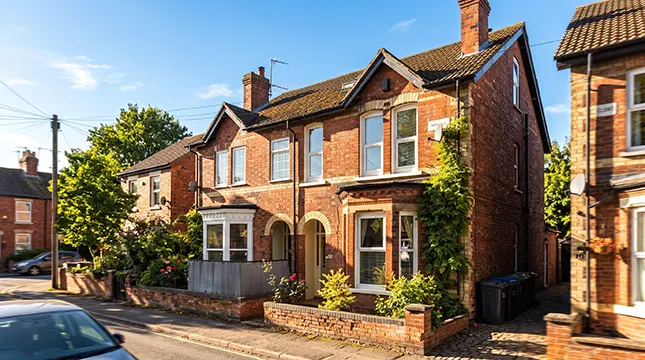
One of the most useful decisions you can make when relocating for a new job in Lincolnshire is whether to buy straight away or rent for a while first.
There is no right answer, but renting for six to twelve months is a very common and sensible choice for job movers.
Renting gives you time to get through probation, learn the roads, and discover which villages you actually like before committing to a purchase. It also takes the pressure off if your current home has not sold by the time your new job starts.
The downside is that a rental is often smaller than the home you are leaving. That is where secure storage comes in.
You move the essentials into your rented home and store the rest of your furniture safely until you find somewhere permanent; then we deliver everything to your new address.
It does mean two moves rather than one, but for many people that is a small price to pay to avoid rushing into the wrong house, and with Barnes of Lincoln, we offer our own storage facilities without the added risk of involving a third party.
Relocation Packages: What to Ask Your Employer

If you are moving because of a new job, always ask whether your employer offers relocation support. Many larger organisations do, particularly in the NHS, higher education, defence, and engineering.
Under HMRC rules, employers can pay up to £8,000 of qualifying relocation costs without you paying tax or National Insurance on it.
To qualify, you generally need to change your main home, and your old home must not be within a reasonable daily travelling distance of your new workplace. Qualifying costs can include removal expenses, storage, legal fees, and certain travel costs. You can find the full details on relocation expenses and benefits on GOV.UK.
Packages vary enormously, so it helps to go into the conversation with HR armed with a few clear questions:
- Is the relocation support a fixed sum, or will costs be reimbursed against receipts?
- Will the company pay the removal firm directly, or will you pay upfront and claim it back?
- Does it cover packing, storage, and temporary accommodation, or only the move itself?
- How many removal quotes do they need to see before approving the cost?
- Is there a clawback clause that asks you to repay some of the money if you leave within a set period?
Whatever you agree, get it confirmed in writing before you book your move.
A clear, itemised written quotation from your removal company makes this conversation with HR much easier, which is why every Barnes of Lincoln quote follows a free survey of your home.
Timing Your Move Around a Start Date
With a job move, the start date is usually fixed, and everything else has to fit around it. Working backwards from that date keeps things manageable.
As Soon as the Offer Is Confirmed
Book your free removal survey straight away, even if your dates are not yet certain. We generally recommend booking four to six weeks ahead, and eight weeks or more during the busy summer months. At the same time, check your notice period on any rented property you are leaving.
Four to Six Weeks Before
Confirm your moving date, decide whether you want our professional packing service or would rather pack yourself with our packing materials, and start decluttering. Our removals checklist is a handy way to keep track of everything else.
The Final Fortnight
Set up post redirection, notify your utility providers, and arrange any parking you need at either end. It is also worth packing a separate bag for your first week at work, with your work clothes, laptop, ID, and any documents your new employer has asked for, so none of it disappears into a box marked “miscellaneous”.
Moving Week
If you can, aim to move a few working days before your start date rather than the weekend just before. It gives you time to unpack the basics, find the nearest supermarket and try out your commute. Moving midweek is often cheaper than a weekend too.
When the Rest of the Family Follows Later

Plenty of job relocations happen in stages.
In some cases, one partner starts the new role while the other finishes a notice period, or the children stay put until the end of the school term. This is a practical approach, and it doesn’t mean paying for two full moves.
A common solution is to move a smaller load of essentials for the person starting work, then bring the rest of the household once everyone is ready.
Alternatively, you can store the main contents of your home while you look for a permanent home together.
Our knowledgeable team can talk you through the options at your survey and help you find the most cost-effective route.
Your First Month in Lincolnshire
Once the boxes are in, you’ll have a few practical jobs to sort in your first few weeks.
Register with a GP
You can register with a GP surgery near your new home without needing proof of address, so there is no reason to wait.
Update your driving licence
You are legally required to change the address on your driving licence and your vehicle logbook and failing to do so can lead to a fine.
Set up council tax
In Lincolnshire, district councils (such as the City of Lincoln, North Kesteven, or South Kesteven) collect council tax, not the county council, so check which one covers your new address.
Sort out school places
If you are moving with children partway through the school year, you can apply for a place through Lincolnshire County Council’s school admissions service. Lincolnshire also still has grammar schools in many areas, so if your children are approaching secondary age, it is worth reading up on how selection works locally.
Keep your post and paperwork in order. A Royal Mail redirection will catch anything you forget to update, and it is worth registering to vote at your new address once you are settled.
Why Choose Barnes of Lincoln for Your Relocation?

Barnes of Lincoln has been moving families across the county since 1919, and every year we help people relocating for work, whether they are arriving from elsewhere in the UK or moving across Lincolnshire for a new role.
- Five Generations of Experience. With more than a century of moving homes in and around Lincoln, we understand the county, its roads, and its quirks.
- BAR Accredited. We are proud members of the British Association of Removers, and we follow the BAR Code of Practice, with your payment protected by their Advance Payment Guarantee.
- Our Own Fleet. We own all our vehicles, giving us extra flexibility during busy periods, which is especially useful when your moving date has to fit around a fixed start date.
- Free Surveys and Clear Quotes. Every move starts with a free survey and a written quote, ideal to share with your employer’s HR team.
- Secure Storage. Modern, secure storage for when your sale, purchase or tenancy dates do not quite line up with your new job.
Whether you are moving to Lincoln, Newark, Grantham or anywhere in between, get in touch today for your free, no-obligation quote.
You can call our Lincoln team on 01522 254 262 or our Newark team on 01636 314 232.
Frequently Asked Questions about Moving Home for a New Job
Can I claim relocation expenses if I am renting rather than buying in Lincolnshire?
Yes, in many cases. Under HMRC rules, a rented property can count as your main home, so your employer’s tax-free allowance can still cover qualifying costs such as removals and storage. Your employer’s own policy will decide exactly what they are willing to pay for, so it is worth checking with HR.
Is there a deadline for using my employer’s relocation allowance?
Generally, yes. Under HMRC rules, qualifying expenses normally need to be incurred by the end of the tax year following the one in which you start your new job. Some employers set shorter deadlines, so check the terms of your package early if you are thinking of renting for a while before buying.
Can my employer pay the removal company directly?
Many employers prefer to pay the removal company directly rather than reimbursing you afterwards. If that is how your package works, let us know when you book, and we can provide a clear written quotation for your HR team to approve.
How quickly can I book a removal if my new job starts soon?
We recommend booking four to six weeks ahead where possible, and eight weeks or more in summer. That said, job moves do not always give much notice, so it is always worth calling us, as we can sometimes accommodate shorter timescales.
Which Lincolnshire towns are best for commuting to London by train?
Grantham and Newark are the most popular choices, as both sit on the East Coast Main Line with frequent fast services to London King’s Cross. Lincoln also has direct LNER trains that take a little under two hours, though they run less frequently.
Can I move some of my belongings now and the rest later?
Yes. If you are starting a new job before the rest of your household, we can move the essentials first and bring the rest later, or keep your main contents in secure storage until you have found a permanent home.
Do Lincolnshire schools still use the eleven plus?
Parts of Lincolnshire still have grammar schools that admit pupils through a selection test, alongside nonselective secondary schools. If you are relocating with children of secondary school age, check the arrangements for your new area through Lincolnshire County Council as early as possible.