

Planning a house move in Lincolnshire and wondering whether your belongings are actually protected while in transit?
Like all forms of insurance cover, it can be a minefield if you don’t understand it.
Removals insurance – or moving insurance as it’s sometimes called – is one of those things that most people assume is sorted, right up until something goes wrong.
Our guide walks you through exactly what removals insurance in the UK covers, what it doesn’t, and why choosing the right protection for your move matters more than you might think.
Let’s dive straight in.
Quick Guide: Removals Insurance When Moving House in Lincolnshire
Here’s a quick overview of everything we cover in this blog.
- What Removals Insurance Actually Is – Understanding the basics of moving insurance in the UK.
- What Standard Liability Covers – The limited protection most removal contracts include by default.
- What Standard Liability Doesn’t Cover – The gaps that catch many movers off guard.
- MoveProtect: The Removal Industry’s Specialist Solution – How dedicated transit protection works.
- Does Your Home Insurance Cover a Move? – Why many people are surprised by the answer.
- Items That Are Typically Excluded – High-value, fragile, and specialist items that need special attention.
- How Professional Packing Affects Your Cover – Why packing method matters for claims.
- Tips for Protecting Your Belongings on Moving Day – Practical steps to reduce risk.
- Choosing a BAR-Accredited Removals Company – Why it matters for peace of mind.
- Barnes of Lincoln and Your Moving Insurance – How we support customers through the process.
- Frequently Asked Questions – Quick answers to common questions about moving insurance in Lincolnshire.
What Removals Insurance Actually Is
When you book a removal company, you might assume your possessions are automatically insured for their full replacement value from the moment they’re loaded onto the van.
Unfortunately, that’s rarely the case.
Removals insurance – more accurately described as goods-in-transit protection – is a specific type of cover designed to protect your belongings during a house move.
It’s separate from your home insurance, and the level of cover you receive depends entirely on how your removal contract is structured and what additional options you take up.
That said, some, not all, insurance providers extend their policies to include removal insurance. Just check this before your move date.
In the UK, removal companies operate under either their own terms and conditions or the standard conditions set by the British Association of Removers (BAR).
Understanding which applies to your move and what that means for your belongings is the first step to making sure you’re properly protected.
What Standard Liability Covers

Most removal contracts include a basic level of liability as standard. This means the removal company accepts responsibility for loss or damage caused by their own negligence during the move.
However, this standard liability is typically limited.
Many removal contracts cap compensation at a fixed amount per item, typically £40-£50 per item, box, or suite.
If your flat-screen television or antique dresser is damaged in transit and it was worth significantly more than that, standard liability alone won’t come close to covering the cost of repair or replacement.
Standard liability will generally apply where:
- The damage was clearly caused by the removal team during loading, transit or unloading.
- The item was packed by the removal company using their own materials and methods.
- The damage is reported promptly and can be evidenced.
Even within those conditions, claims can be subject to scrutiny, and the burden of proof often sits with the customer.
This is why understanding exactly what you’re signed up for before moving day is so important.
What Standard Liability Doesn’t Cover
This is where many people get a rude awakening.
Standard liability has some significant gaps, and being aware of them in advance could save you a great deal of frustration.
Owner-packed items are a common exclusion. If you pack your own boxes, many removal companies will not accept liability for any breakages inside those boxes, even if the damage occurred during transit. The rationale is that they had no control over how items were wrapped or arranged.
Pre-existing damage is typically excluded, which sounds fair enough – but it does mean that a thorough condition report (including photos of said object) before loading can be valuable.
Mechanical or electrical derangement is another frequent exclusion. If an appliance or electronic device stops working after the move but shows no external signs of damage, the removal company may not be liable under standard terms, even if the move was the likely cause.
Televisions are especially sensitive to movement and vibration during transportation and can sometimes develop internal faults without being dropped, knocked, or otherwise visibly damaged.
Items of particularly high value, sentimental items, jewellery, cash, documents, and collectables are often excluded entirely or require specific declaration.
And if you’re using storage as part of your move, the cover during storage may differ from the cover during transit.
None of this means you should panic; it just means you need to know what you’re working with and take steps to fill any gaps.
MoveProtect: The Removal Industry’s Specialist Solution
One of the most reassuring developments in the UK removals industry in recent years is the growth of dedicated moving protection products.
The most widely used specialist solution is MoveProtect, developed by Basil Fry – the specialist insurance broker for the removals and storage industry.
MoveProtect works by allowing removal companies to offer customers an enhanced level of liability as part of their service, going well beyond the standard limited liability found in most contracts.
Rather than you having to source your own transit cover, the removal company can provide it as an additional service, making the process considerably simpler.
Key Features of MoveProtect
- No excess: Unlike many online insurance products, MoveProtect carries no excess, meaning customers don’t face an upfront cost when making a claim.
- Continuous protection: Cover remains in place throughout both the transit and any associated storage period, so there’s no risk of a policy lapsing midway through your move.
- Worldwide reach: MoveProtect is available for UK moves, European removals, and deep-sea international shipments, making it a useful option whether you’re moving within Lincolnshire or relocating further afield.
- Expert claims handling: Claims are handled by Basil Fry’s in-house Removal Claims Service team, which settles thousands of customer goods claims each year and is considered the most experienced claims team in the UK removal industry.
- No need to source your own cover: The removal company arranges everything, saving you the time and hassle of finding a separate policy.
To use MoveProtect, customers are asked to declare the maximum replacement value of their goods, review and agree to the operator’s terms and conditions, and pay the MoveProtect charges set by the removal company.
You can find full details on the Basil Fry MoveProtect page.
Good to Know: The key difference between MoveProtect and a standard online transit insurance policy is continuity. Online policies can lapse during storage, leaving your belongings unprotected. MoveProtect remains in place throughout transit and storage.
Does Your Home Insurance Cover a Move?

Many people assume their existing home insurance will cover their belongings during a move. It’s a perfectly reasonable assumption and one that frequently turns out to be wrong.
Most standard home contents insurance policies cover your belongings within your home and sometimes in transit, but the conditions can be restrictive.
Cover during a removal is often excluded unless it is specifically mentioned in your policy, and even where some transit cover is included, it may not apply to a professional removal, or it may only cover a very limited period.
If you’re in any doubt, it’s worth contacting your insurer directly before moving day and asking specifically whether your contents policy covers goods in transit during a house move.
The Association of British Insurers (ABI) has general guidance on home insurance that can help you ask the right questions.
The important point is not to assume. Checking is always worth the ten minutes it takes.
Items That Are Typically Excluded or Need Special Declaration
Whether you’re relying on standard liability, a MoveProtect arrangement, or your own insurance policy, there are categories of items that regularly need special attention. Being aware of these before you move will save you a great deal of trouble.
- Jewellery, watches, and cash – These are almost universally excluded from removals cover and should be transported personally rather than in the removal van.
- High-value items – Antiques, fine art, collectables, and specialist items that exceed a certain replacement value will often need to be declared separately and may require specialist handling and cover.
- Documents – Passports, deeds, wills, and financial records should be kept with you personally during a move.
- Plants – Many removal companies will not accept liability for plants, as their condition can deteriorate in transit through no fault of the removal team.
- Perishable items – Food and other perishables are generally excluded.
- Items requiring specialist handling – Pianos, snooker tables, and certain large items often require specialist removal services. Barnes of Lincoln offers specialist piano removals for exactly this reason.
If you’re unsure about a specific item, the straightforward answer is to ask your removal company before moving day. A good removal company will be happy to advise.
How Professional Packing Affects Your Cover
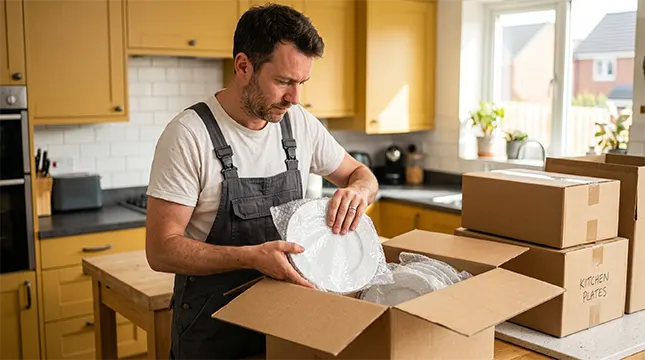
This is one of the most practically important points in this entire guide.
Whether your belongings are packed by you or by the removal company can make a significant difference to the success of a claim.
When a professional removal team packs your belongings using appropriate materials and industry-standard methods, the removal company has full visibility of how items were prepared and can accept liability for damage with far less ambiguity.
However, when you pack your own boxes, the removal company can reasonably argue that they had no control over the packing, and many will use that as grounds to decline a claim for internal breakage.
This doesn’t mean you must pay for a full professional packing service, but it does mean that if you choose to pack your own boxes, you should do so carefully and be aware of the potential implications for any claim.
Barnes of Lincoln’s professional packing service is one option worth considering, especially for fragile or high-value items.
You can also read more about the pros and cons of professional packing versus DIY in our dedicated blog.
Pro Tip: Even if you pack most of your belongings yourself, consider asking your removal company to professionally pack your most fragile or valuable items. This hybrid approach can offer a good balance of cost and protection.
Tips for Protecting Your Belongings on Moving Day

Good insurance or transit protection is a safety net, but your first priority should always be minimising the chance of damage in the first place.
Here are some straightforward steps that make a real difference.
- Make an inventory: Before the removal team arrives, photograph your belongings and make a written record of items of value. This will be invaluable if you ever need to make a claim.
- Declare your values accurately: If you’re taking out MoveProtect or any other protection, ensure you declare the correct replacement value of your belongings. Undervaluing to save on the premium can result in reduced payouts.
- Report damage promptly: Most removal contracts and insurance policies require that damage be reported within a specific timeframe. Check the terms and don’t delay.
- Read your contract: Before you sign anything, read through the removal company’s terms and conditions. If anything is unclear, ask.
- Transport valuables personally: Jewellery, cash, important documents, and irreplaceable sentimental items should travel with you, not in the removal van.
- Use quality packing materials: If you’re packing your own boxes, invest in good quality materials. Barnes of Lincoln supplies packing materials to customers for exactly this purpose.
Choosing a BAR-Accredited Removals Company in Lincolnshire
If you want the clearest possible framework for how your belongings will be handled and what happens in the event of a problem, choosing a British Association of Removers (BAR) accredited company is a sensible starting point.
BAR members are required to operate to a published Code of Practice, which covers everything from pre-move surveys and written quotations to complaints handling and alternative dispute resolution. This means that if something does go wrong, there is a clear and independent process for resolving it.
BAR members also have access to the Advanced Payment Guarantee (APG), which protects any payments you make in advance should a removal company become insolvent before your move takes place.
Any disputes that cannot be resolved directly can be referred to the Furniture & Home Improvement Ombudsman, giving you an additional layer of recourse.
You can verify whether a removals company is a current BAR member directly on the BAR website.
Rest assured, Barnes of Lincoln is a proud BAR member, and our domestic moving services follow the BAR Code of Practice throughout.
Barnes of Lincoln and Your Moving Insurance
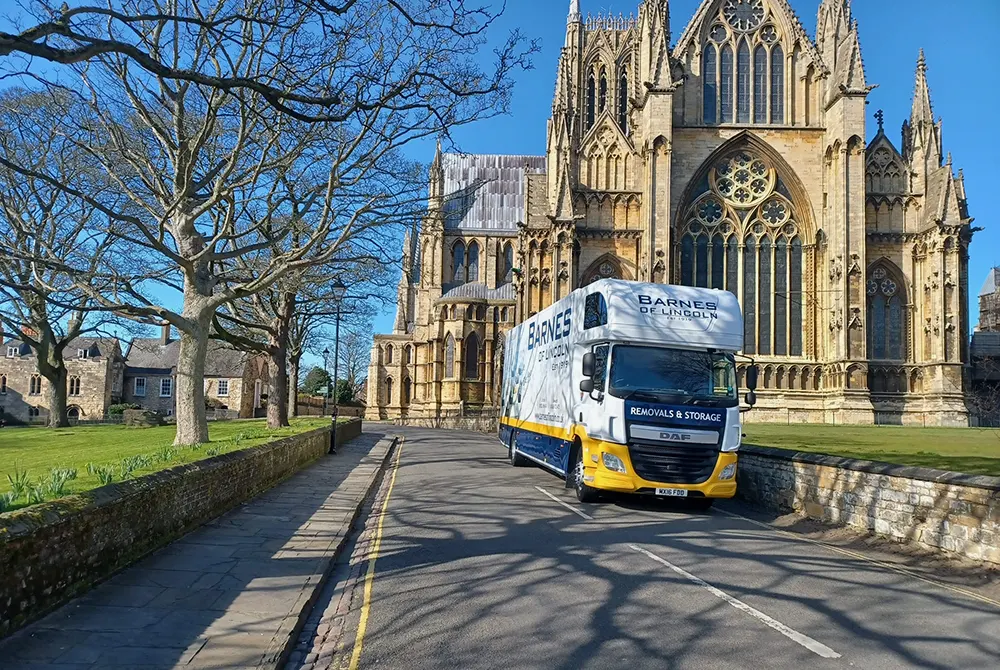
At Barnes of Lincoln, we’ve been helping families and businesses across Lincolnshire move home since 1919.
In that time, we’ve learned that the customers who have the smoothest experience are invariably the ones who understand what they’re covered for before moving day arrives.
When you book a free home survey with our team, we’ll walk you through our terms and conditions, discuss the protection options available to you, and make sure you have a clear picture of exactly what is and isn’t covered for your specific move.
We offer a range of removal services across Lincoln, Newark, and the wider Lincolnshire area, including home, office, European, and international removals, with secure storage solutions available if needed.
The bottom line is simple: the right protection for your belongings is an important part of any well-planned house move, and it’s something we’re always happy to talk through with you.
Ready to plan your move? Get in touch with Barnes of Lincoln today for a free, no-obligation home survey and quote. Our friendly team is based in Lincoln and Newark and is ready to help.
Frequently Asked Questions About Removals Insurance in Lincolnshire
Is removals insurance the same as home insurance?
No. Removals insurance, or goods-in-transit protection, specifically covers your belongings during a house move. Most standard home contents insurance policies do not automatically cover goods during a professional removal, though it is always worth checking your policy wording directly with your insurer.
Do I have to take out separate moving insurance UK?
Not necessarily. Many professional removal companies offer transit protection as part of or alongside their services – MoveProtect is a good example. However, the standard liability included in a removal contract is typically limited, so it is worth discussing your options with your removal company before assuming you are fully covered.
What is the standard liability limit in a removal contract?
This varies between companies, but many standard removal contracts cap liability at around £40 to £50 per individual item, box or suite. This is often well below the replacement value of everyday household items, let alone high-value possessions, which is why many customers opt for enhanced protection.
What is MoveProtect?
MoveProtect is a specialist protection product for the removals industry, developed by Basil Fry. It allows removal companies to offer customers an enhanced level of liability cover that goes well beyond the standard limited liability position. MoveProtect has no excess, provides continuous cover through transit and storage, and includes access to an expert claims settlement service.
Does packing my own boxes affect my cover?
Yes, it can. Many removal companies will not accept liability for damage to items that were packed by the customer, as they had no control over how those items were prepared. If you pack your own boxes, be aware that you may have reduced recourse in the event of a claim for internal damage.
What should I do if something is damaged during my move?
Report any damage to your removal company as promptly as possible. Most contracts and protection products require damage to be reported within a specific timeframe. Take photographs and make a written record of the damage. If you are a customer of a BAR-accredited company and cannot resolve the matter directly, you can refer the dispute to the Furniture & Home Improvement Ombudsman.
How do I find out more about Barnes of Lincoln’s removal services in Lincolnshire?
You can find out more about our full range of services on the Barnes of Lincoln website, or call our Lincoln office on 01522 254 262 or our Newark office on 01636 314 232. We offer free, no-obligation home surveys and are happy to answer any questions about your move.