

Moving abroad and wondering how to pick an international removals company?
You are in the right place.
Lincolnshire is a county that quietly gets on with things and the people leaving it to start a new life abroad tend to be pretty similar.
They’re not looking for drama; they just want their belongings to arrive safely on the other side of the world, ideally without a mountain of stress between here and there.
But an international removal is a completely different beast from a local house move.
Yes, you have to pack everything up just as you would for a UK-based move, but there is much more to an international move than that.
There are shipping containers to think about, customs paperwork to navigate, and a timeline that stretches over weeks rather than days.
The good news? With the right full-service removal company behind you, almost every piece of that puzzle can be handled on your behalf.
Our insightful guide walks you through exactly what an International Removals from Lincolnshire really looks like in 2026.
What This Guide Covers

In our article, you will find everything you need to know about international removals from Lincolnshire in 2026, from the first survey to the final delivery.
- Pre-move survey – assessing volume, route, and container type.
- Professional packing – specialist materials and full itemisation
- Shipping options – sea, road, or air freight depending on destination.
- Customs and paperwork – documentation, declarations, and duty-free entry
- Storage solutions – secure warehousing when timings don’t align.
- Specialist items – bespoke handling for pianos, antiques, and valuables
- Europe vs worldwide – how logistics differ by destination.
- Transit insurance – full replacement cover for the journey.
- Collection day – what to expect from your removals crew
- Post-collection process – container booking through to vessel departure.
- Arrival and delivery – port clearance through to placement in your new home
- Choosing a remover – accreditations, experience, and trust
Barnes of Lincoln has managed international moves since 1919 — use this guide to move abroad with confidence.
Starting Right: The Pre-Move Survey

Every well-run international move begins not with boxes, but with a conversation and a careful assessment.
A free pre-move survey carried out at your Lincolnshire home allows a removals specialist to calculate the exact volume of your shipment, identify fragile or specialist items, and map out the most logical route to your destination.
It also means your quote will be accurate; no nasty surprises later.
For moves heading beyond Europe, think Australia, South Africa, Canada, or the UAE, this survey is invaluable: it tells you whether a shared container (groupage) or a sole-use container makes more financial sense, and it shapes the entire project plan that follows.
The Art of the Pack: Professional Packing Services
Professional packing for an international shipment is streets apart from wrapping a few plates in newspaper.
Specialist materials, purpose-built picture crates, acid-free tissue, extra wrapping to protect belongings against the vibrations, humidity changes, and handling pressures of a long sea voyage or airfreight journey.
A skilled removals crew will also itemise and catalogue every box, which makes customs clearance far smoother at the destination end.
You can browse Barnes of Lincoln’s packing materials to see what professional-grade supplies look like or simply hand the whole job to the team and concentrate on the myriad of jobs that need your attention with an international home move.
How Your Belongings Actually Get There: Shipping Options

Almost all international household moves are transported by sea in a steel shipping container.
You’ll either share space with other customers (a groupage or part-load service, which costs less) or book an exclusive container for your sole use, better for larger properties or tight deadlines.
For shorter European routes, road transport is typically faster and more cost-effective.
Airfreight exists for urgent, low-volume consignments: a laptop, important documents, and a few essentials that need to arrive before the main shipment.
Here again, a knowledgeable surveyor will assess your consignment and advise you how best to get your belongings from A to B.
Customs, Paperwork, and the Rules You Need to Know
Customs documentation is the part of an international move that catches the most people off guard; get it wrong, and it can be disastrous.
Every country has its own import requirements for household effects, and most require a detailed inventory, proof of residency, and a declaration confirming your goods are used (not new) personal effects, to qualify for duty-free entry.
A reputable full-service company prepares all of this on your behalf, advises on prohibited items, and liaises with destination port agents.
For UK residents, the UK Government’s personal effects guidance is useful background reading, whether you’re departing or arriving.
Your removals company should know this landscape inside out.
Another very helpful source of information is via the FIDI global alliance website.
They have downloadable copies of the customs regulations for all international destinations, so you know exactly where you stand customs-wise.
Storage Solutions When the Timing Doesn’t Quite Line Up

It happens more often than you’d think: you complete on your Lincolnshire property on a Thursday, but your new home abroad isn’t ready until the following month.
Or you need to find suitable accommodation in your chosen country before you can send for your belongings.
That’s where interim storage becomes not just convenient, but essential.
A full-service international mover will offer secure warehousing, containerised or palletised, so your belongings wait safely in a managed environment until the timing works out.
Barnes of Lincoln’s storage options include both self-storage and fully managed container storage, offering real flexibility whether you need a week’s buffer or a three-month bridging solution.
Pianos, Antiques, and Other Awkward Passengers

Not all belongings are created equal, and any experienced international removals team will tell you so.
A grand piano, a valuable artwork, a classic motorcycle, or a collection of antique ceramics each requires bespoke handling such as custom crating, specialist lifting equipment, and often additional insurance cover.
This is where an established company earns its reputation. Barnes of Lincoln’s piano removal service is a fine example of how deep specialist knowledge translates into genuine care for your most cherished items.
Always flag anything unusual when you have your pre-move survey, well before moving day, not on it!
European Moves vs. Worldwide Relocations: What Actually Changes?
European removals from Lincolnshire, particularly to France, Spain, Germany, or Portugal, are typically handled by road, with door-to-door transit times of just a few days.
Post-Brexit customs processes apply, but the logistics remain comparatively manageable.
Worldwide moves involve port booking, container loading, ocean transit, destination customs clearance, and local delivery by a trusted partner agent, with timelines ranging from four to twelve weeks depending on the destination.
Barnes of Lincoln’s European removals page covers continental options, while their international removals service handles the wider world.
Insurance: The Part You Really Shouldn’t Skip
Transit insurance for an international removal isn’t a luxury; it’s the safety net that covers loss or damage during a journey that may last weeks and change hands multiple times.
Standard carrier liability is typically limited in scope, so a comprehensive marine transit policy, one that covers the full replacement value of your possessions, is strongly recommended.
The British Association of Removers (BAR) advises all customers to confirm that their mover’s insurance explicitly covers the destination country.
Photograph high-value items before they’re packed. It takes 20 minutes and could save you thousands if you need to make a claim.
What Collection Day Looks Like for an International Move
On collection day, your removals team will arrive with a suitable-sized vehicle.
One of the team will be in charge, and you should liaise with him/her regarding any concerns or instructions you might have.
They will get to work systematically, making their way through your property room by room.
As they go, they will be packing, labelling, and cross-referencing every item against the manifest.
Fragile and specialist pieces are wrapped on-site if a full packing service has been booked.
Depending on the volume of your move, it can take one to two days to cully complete the pack.
They are long days, but a well-organised crew turns it into a choreographed handover rather than a chaotic scramble.
What Happens after Your Collection?

Once packed into the removal lorry, your consignment is transported to our international consolidation depot to await export.
A container is then booked from the shipping line with the quickest delivery date to your port of entry (you will be notified of the arrival date asap).
When the container arrives, your consignment is carefully packed and secured inside.
The doors are closed, and the container heads to the closest port of exit in the UK.
Upon arrival, it is first checked into the terminal and matched against its booking and shipping documents.
The container is then weighed (to meet SOLAS regulations), officially sealed and cleared through export customs, confirming all declarations are correct.
After clearance, it is moved into the port’s secure stacking area to await vessel loading.
The shipping line allocates it to a specific ship and loading plan.
When the vessel arrives, cranes lift the container on board according to the plan.
Finally, it is secured in place, and once all cargo is loaded, the ship departs for its international destination.
The Procedure After Arrival at the Destination Port
Once the container arrives at the destination port, it is unloaded from the vessel and transferred to the terminal stacking area.
The shipment is registered with local port authorities and enters the import customs process.
Documentation is reviewed, duties and taxes (if applicable) are assessed, and in some cases, the container may be selected for inspection.
Once customs clearance is granted, the container is released to the destination agent or transport provider.
It is then collected from the port and moved either to a local warehouse for unpacking or delivered directly to your new residence.
Finally, the goods are unloaded, unwrapped, and placed as instructed, completing the international move.
Choosing a Removal Company You Can Actually Trust
For an international relocation, trust isn’t a nice-to-have; it’s everything.
Your worldly possessions are heading across an ocean, and you need certainty that the company behind them has the experience, the accreditations, and the global network to see it through properly.
Membership of the British Association of Removers (BAR) is one of the most recognised quality marks in the UK removals industry: members are independently audited and bound by a strict code of practice.
Beyond accreditations, look for genuine customer testimonials, clear evidence of international experience, and crucially, a team that actually answers the phone.
Ready to Move Abroad? Talk to Barnes of Lincoln
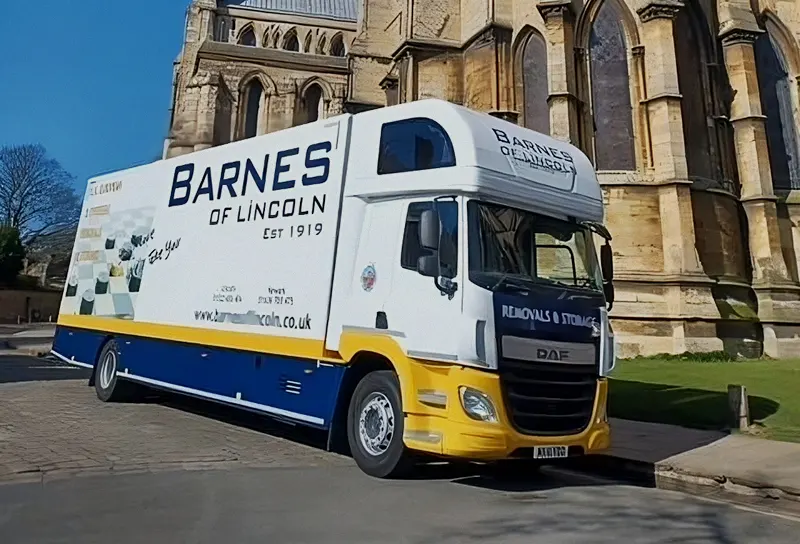
Barnes of Lincoln has been helping families and individuals relocate locally, nationally, and internationally since 1919.
That’s more than a century of removals experience woven into every move they handle, backed by a modern fleet of specialist vehicles and a team that genuinely cares about getting it right.
As proud BAR members, they hold themselves to the highest professional standards in the industry because anything less simply isn’t good enough.
Whether you’re emigrating to Australia, relocating to Europe, or moving anywhere in between, Barnes of Lincoln will manage your overseas removal from initial survey right through to final delivery — covering packing, shipping, documentation, and storage every step of the way.
A free, no-obligation quote is just a call or click away.
Request your free quote online →
Frequently Asked Questions
Q: How far in advance should I book an international removal?
A: As a rule, the earlier the better, especially for long-haul destinations. For worldwide moves, booking eight to twelve weeks ahead gives your removal company time to secure the right container space, coordinate with destination agents, and prepare all customs paperwork without last-minute pressure. European moves can often be organised in four to six weeks, but summer periods fill up quickly. If your date is fixed, don’t sit on it.
Q: Can I pack some boxes myself for an international shipment?
A: Yes, but with caveats. Customs authorities in many countries are permitted to inspect or reject ‘owner-packed’ boxes that aren’t properly inventoried. Some destinations require all goods to be professionally packed in order to qualify for duty-free entry as used personal effects. Always discuss this with your removals company before packing anything. For fragile or high-value items, professional packing is advisable regardless of what the destination rules say.
Q: What happens if my shipment gets delayed at customs?
A: Customs delays are more common than most people expect, ranging from a day or two to several weeks, depending on the country and the completeness of your documentation. A full-service removal company will have a destination agent who can monitor your shipment’s progress and liaise with customs officials directly. Thorough paperwork preparation at the UK end dramatically reduces the risk, which is why the documentation process matters so much.
Q: Are there things I’m not allowed to ship to another country?
A: Yes, every country maintains its own prohibited and restricted import list. Common examples include certain foodstuffs, plants, soil, specific types of wood, firearms, and chemical products. Some destinations restrict alcohol or tobacco above a set quantity. Your removals company should provide destination-specific guidance on prohibited items during the pre-move process. When in doubt, declare everything and let the professionals advise; it’s always better to ask than to assume.
Q: Am I covered if something is lost or damaged during my international move?
A: Standard carrier liability typically covers only a fraction of the true value of most household items, so a dedicated marine transit insurance policy is strongly recommended for any overseas removal. This type of cover is specifically designed for goods in transit over long distances and can usually be arranged through your removal company or independently. Before signing up, check what is and isn’t covered, especially for electronics, antiques, and anything of irreplaceable sentimental value.
Q: Can I include my car in an international removal?
A: Vehicle shipping is possible alongside a household goods move to many countries, though it’s typically treated as a separate element of the consignment. Cars can travel in a shared or dedicated container depending on destination and budget. Import duties and local re-registration rules vary considerably by country, so it’s worth thoroughly researching the requirements well in advance. Your removal company should be able to advise or connect you with a reputable vehicle shipping specialist.