
Looking for document storage in Lincoln?
If your office has filing cabinets that haven’t been opened in two years, a server room full of paper records, or folders of client files eating up valuable floor space, you are far from unusual.
Across Lincoln and Lincolnshire, thousands of businesses quietly struggle with the same problem: too many documents, not enough room, and growing pressure to stay on the right side of the law.
Secure document storage in Lincoln offers a practical, affordable answer.
Whether you run a busy law firm on Steep Hill, a busy GP practice in Gainsborough, a financial advisory in Newark, or a manufacturing business in the Lincolnshire Wolds, off-site document storage can free up your workspace, protect your records, and keep you compliant with UK data protection rules, all without breaking the bank.
In our guide, we cover everything you need to know – who typically uses professional document storage in Lincoln, what it realistically costs, how long you are legally required to keep different types of records, and how to choose the right provider for your needs.
If you are considering document storage in Lincoln, this guide explains who uses it, what it costs, how long records must legally be kept, and how to stay compliant with UK data protection laws.
Key Topics Covered in This Blog
- What Is Professional Document Storage? – Learn how secure off-site document storage works and why businesses use it to protect records and free up office space.
- Who Uses Secure Document Storage in Lincolnshire? – Discover which sectors benefit most, including solicitors, accountants, healthcare providers, schools, HR firms, and manufacturers.
- How Long Does UK Law Require You to Keep Records? – See the minimum legal retention periods for financial, medical, employee, school, and business records.
- GDPR and UK Data Protection – Understand how UK GDPR applies to physical paperwork and why secure storage matters for compliance.
- What Does it Cost to Store Documents? – Find out what affects document storage pricing and why off-site storage is often cheaper than expanding office space.
- Document Storage vs Self Storage – Compare specialist archive storage with general self-storage units and learn which is best for sensitive records.
- Moving Office? Don’t Overlook Your Archive – Learn how combining office removals with document storage can reduce costs and simplify relocation.
- Document Destruction and Disposal – Understand how confidential records should be securely destroyed once retention periods expire.
- Five Signs Your Business Needs Off-Site Storage – Spot the warning signs that your current filing system is costing space, time, and compliance confidence.
- Why Choose Barnes of Lincoln? – See what makes Barnes of Lincoln a trusted local choice for secure document storage in Lincolnshire.
- Frequently Asked Questions – Quick answers on security, access, pricing, storage periods, and getting started.
Whether you need to clear office space, improve compliance, or safely archive sensitive records, this guide covers everything businesses need to know about secure document storage in Lincoln.
What Is Professional Document Storage?
Professional document storage is an off-site service that allows businesses and organisations to store physical records in a secure, managed facility.
Unlike leaving boxes in a back room or a damp garage, a reputable storage provider offers purpose-built, dry, climate-controlled conditions that protect paper records from damp, fire, pests, and unauthorised access.
At Barnes of Lincoln, our document storage service operates from our Fort Barnes facility in North Hykeham, conveniently located between Lincoln and Newark.
Documents are stored in sealed containers, with access strictly controlled so that only you can retrieve your records.
The facility is open six days a week, meaning access is rarely more than a short drive away when you need it.
You retain complete control over your documents at all times. We simply provide the secure environment, the logistics, and the peace of mind.
Who Uses Secure Document Storage in Lincolnshire?

Secure document storage in Lincolnshire is not just for large corporations.
In fact, some of the most frequent users are small and medium-sized businesses, professional services firms, and public sector organisations that have legal or regulatory obligations around record keeping.
Here is a look at the sectors that benefit most.
Solicitors and Legal Practices
Law firms generate enormous volumes of paperwork.
Client case files, contracts, deeds, wills, probate records, and correspondence all need to be retained, often for decades.
The Solicitors Regulation Authority (SRA) sets out clear expectations around records management, and failure to maintain proper archives can have serious professional consequences.
Off-site storage allows legal practices to free up prime office space on the High Street while keeping their archives fully accessible and secure.
Accountants and Financial Services
HMRC requires businesses to retain financial records for a minimum of six years following the end of the relevant accounting period.
For accountancy practices, this means storing years of client tax returns, payroll records, VAT submissions, and correspondence.
Professional document storage offers a compliant, organised solution that also makes audits far less stressful.
Medical and Healthcare Practices
GP surgeries, dental practices, physiotherapy clinics, and care homes are all subject to strict NHS and Care Quality Commission requirements around patient record retention.
Adult patient records must typically be kept for a minimum of eight years after the last entry, and records for children must be retained until their 25th birthday.
The consequences of mishandling or losing medical records are severe, making professionally managed storage an essential investment rather than an optional extra.
Property and Estate Agents
Estate agents, letting agents, and property management companies handle a steady flow of tenancy agreements, inspection reports, deposit documentation, Land Registry correspondence, and compliance certificates.
Many of these records need to be retained for years after a tenancy ends and keeping them in good order protects the business in the event of a dispute.
HR and Recruitment Firms
Businesses with employees are required to keep personnel files, payroll records, right-to-work checks, and disciplinary documentation for specific periods under UK employment law.
Off-site document storage ensures these sensitive records are held securely and away from day-to-day office environments where data breaches are more likely to occur.
Manufacturing and Engineering Businesses
Lincolnshire has a strong manufacturing and engineering base, and these businesses often need to retain technical drawings, quality assurance records, product specifications, and compliance certificates for lengthy periods, particularly those working in aerospace, food production, or pharmaceuticals where audit trails are critical.
Schools, Academies, and Educational Establishments
Schools and academies are required to retain pupil records for many years after a child leaves, alongside staff files, governors’ meeting minutes, and financial records.
As physical office space in school buildings is usually at a premium, off-site storage is a practical and cost-effective answer.
How Long Does UK Law Require You to Keep Records?
One of the most common questions we hear from businesses enquiring about document storage in Lincoln is: how long do I actually need to keep all this?
The answer varies depending on the type of record, but the table below gives a practical overview for the most common categories.
| Document Type | Minimum Retention Period | Relevant Authority |
| Company accounting records | 6 years from end of accounting period | HMRC / Companies Act 2006 |
| PAYE and payroll records | 3 years after end of tax year | HMRC |
| VAT records | 6 years | HMRC |
| Employee personnel files | 6 years after employment ends | ICO / Employment Law |
| Adult patient medical records | 8 years after last entry | NHS / CQC |
| Children’s medical records | Until patient’s 25th birthday | NHS Guidelines |
| Contracts and legal agreements | 6 years after expiry (12 for deeds) | Limitation Act 1980 |
| Pension scheme documents | 6 years minimum | The Pensions Regulator |
| Health and safety records | 3 to 40 years depending on type | HSE Guidelines |
| School and pupil records | 25+ years in many cases | DfE Guidance |
For a comprehensive and authoritative overview of retention schedules across all sectors, the Information Commissioner’s Office (ICO) and the National Archives Retention Guidelines are excellent starting points.
Always consult your sector’s specific regulatory body for the most up-to-date requirements.
GDPR and UK Data Protection: What Businesses Need to Know
Since the introduction of the UK General Data Protection Regulation (UK GDPR) and the Data Protection Act 2018, businesses handling personal data face clear legal obligations around how that data is stored, accessed, and eventually destroyed.
The ICO’s guidance on documentation and record keeping sets out these obligations in detail.
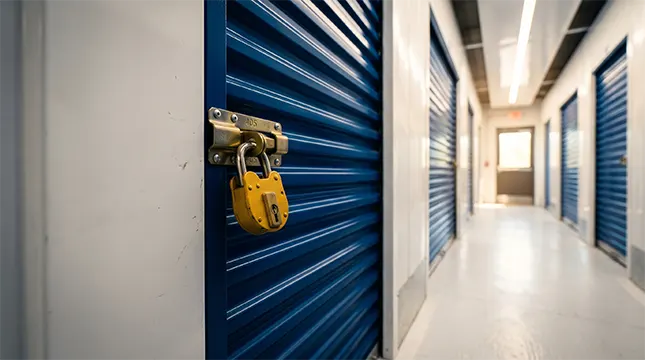
Storing documents containing personal data in an unsecured back office, a filing cabinet accessible to all staff, or an unlocked storage room does not meet the standard of ‘appropriate technical and organisational measures’ required by UK GDPR.
A data breach involving physical records can carry the same ICO enforcement consequences as a digital breach, including substantial fines.
At Barnes of Lincoln, we operate in compliance with data protection legislation.
Documents stored with us are placed in sealed containers, with access restricted exclusively to authorised personnel from your organisation.
Our high-security facility ensures that your records are protected at all times, giving you the confidence that comes from knowing your obligations are being met.
Important: UK GDPR does not just apply to digital data. Physical documents containing personal information, such as patient records, client files, HR records, or financial statements, are equally subject to data protection law.
Storing these securely off-site with an accredited provider is a straightforward way to demonstrate compliance.
What Does it Cost to Store Documents?
Cost is understandably one of the first questions businesses ask, and the good news is that professional document storage in Lincoln is typically far more affordable than most people expect.
When you weigh it against the alternative of renting larger office premises to accommodate ever-growing archives, it makes sense to make use of local storage facilities.
Pricing for secure document storage in Lincolnshire generally depends on a handful of key factors:
- Volume of records stored, usually measured by the number of archive boxes or linear metres of shelving.
- Duration of storage, with longer-term arrangements often attracting more competitive rates
- Frequency of access, as some businesses retrieve documents regularly while others store and rarely touch their archives.
- Additional services required, such as collection and delivery, packing materials, or scheduled destruction of records at end of retention period.
At Barnes of Lincoln, we offer competitive, transparent pricing tailored to the specific needs of your business on a case-by-case basis.
Whether you store a few boxes of historical financial records or several hundred files of active client documents, we can build a storage plan that works for your budget and your schedule.
Our facility is open six days a week, collection and delivery services are available, and there is no minimum or maximum storage term, so you pay only for what you need.
For a personalised quote based on your exact requirements, contact the Barnes of Lincoln team today.
Document Storage vs Self Storage: Which Is Right for Your Business?
Many businesses wonder whether a general self-storage unit might serve just as well as dedicated document storage.
While self-storage certainly has its place, there are some important distinctions to consider.
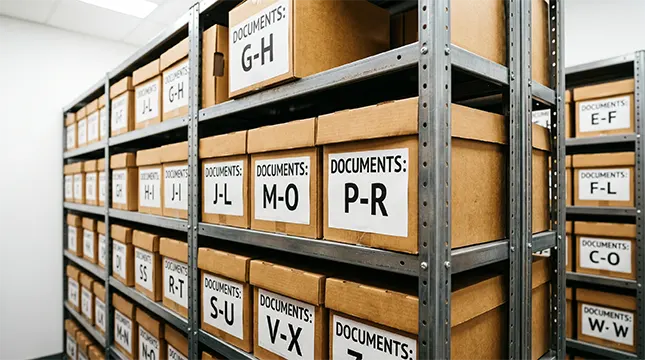
Dedicated document storage is specifically designed for paper records. Conditions are managed to prevent damp, mould, and deterioration plus access controls are tighter.
Importantly, a professional document storage service operates under recognised data protection compliance frameworks, which a generic self-storage unit typically does not.
For businesses with legal, financial, medical, or HR records, this distinction matters enormously from a compliance perspective.
Self-storage, on the other hand, is often a better fit for furniture, stock, equipment, or household belongings during a move or renovation.
If you need to store non-sensitive business items alongside your documents, our team can help you find the right combination of services.
Moving Office? Don’t Overlook Your Document Archive

If your business is planning an office move or relocation in the Lincoln area, the moment before you pack up is often the ideal time to audit your document archive and arrange off-site storage for records you no longer need on-site.
Many businesses realise during a move that a significant proportion of their office space is dedicated to paper files that could quite easily live securely off-site.
Barnes of Lincoln provides specialist office removals in Lincoln alongside our document storage service, making it easy to declutter, reorganise, and relocate in one coordinated process.
Our experienced team can collect your archive boxes during the removal itself, transport them directly to our storage facility, and have them ready for access from your new premises from day one.
This joined-up approach saves time, reduces disruption, and often means you need considerably less space in your new office, which can translate into meaningful savings on rent.
Document Destruction: What Happens When You No Longer Need Your Records?
Every record has a shelf life. When your documents reach the end of their legally required retention period, they need to be disposed of correctly.
Under UK GDPR and the Data Protection Act 2018, simply throwing confidential paperwork in a general waste bin is not acceptable and could constitute a data breach.
Secure document destruction typically involves cross-cut or micro-cut shredding that renders documents completely unreadable, followed by recycling of the resulting paper material.
Certificates of destruction are normally issued, providing your business with an auditable record of compliant disposal.
When you store documents with Barnes of Lincoln, our team can advise on appropriate destruction options when the time comes, ensuring your records are retired as responsibly as they were stored.
For further guidance on compliant document disposal, the ICO’s data protection disposal policy is a helpful resource.
Five Signs Your Business Needs Off-Site Document Storage
Not sure whether now is the right time to look into document storage in Lincoln?
Here are five clear signals that your business would benefit from a professional off-site solution.
- Your filing cabinets and storage rooms are overflowing, and you are running out of space to store new records properly.
- Staff are spending too much time searching for archived documents that should be easy to locate.
- You are paying to rent office or commercial premises space that is being used almost entirely to store paper records.
- You are not confident that your current document storage arrangements meet UK GDPR requirements or your sector’s specific regulatory standards.
- You are planning an office move or downsizing and need to deal with a large volume of historical records before or during the transition.
If any of these apply to your business, it is worth having a conversation with the Barnes of Lincoln team.
A short, no-obligation discussion is usually enough to identify the most practical and cost-effective way forward.
Why Choose Barnes of Lincoln for Secure Document Storage in Lincolnshire?
Document storage is one of those business decisions that, once made, quickly makes you wonder why you didn’t do it sooner.
Freeing up office space, reducing the risk of a data protection breach, and knowing your records are professionally managed in a secure, accessible facility makes life noticeably easier for businesses of all shapes and sizes.
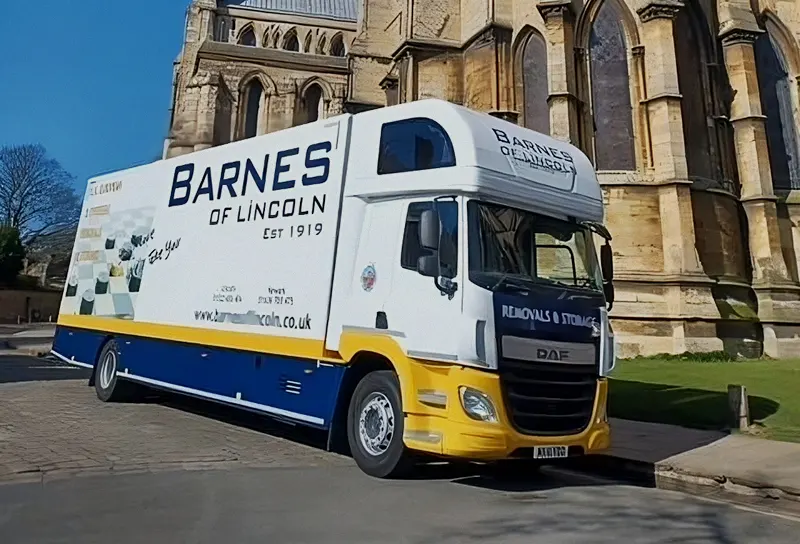
Barnes of Lincoln has been serving local homes and businesses since 1919, and our document storage service carries the same values of reliability, care, and professionalism that have defined the business for over a century. Here is what sets us apart.
- Purpose-built, secure facility: Our Fort Barnes depot in North Hykeham is purpose-built for storage, dry, clean, and designed to protect documents from deterioration.
- Data protection compliance: We operate in line with data protection legislation, with sealed containers and strictly controlled access for your peace of mind.
- Flexible access, six days a week: Retrieve or manage your records at a time that suits your business schedule, without lengthy notice periods.
- Collection and delivery service: We can transport documents to and from your premises, saving your team time and effort.
- No minimum storage term: Whether you need storage for six months or six years, our flexible arrangements work around your needs.
- Competitive, transparent pricing: Affordable rates for businesses of all sizes, with no hidden costs
- Local knowledge and a trusted reputation: Over a century of serving the Lincoln and Lincolnshire business community, backed by our membership of the British Association of Removers (BAR), the industry’s most respected accreditation body.
Ready to free up your office space and stay compliant? Call our Lincoln office on 01522 254 262 or our Newark office on 01636 314 232 or visit barnesoflincoln.co.uk/contact to request your free, no-obligation storage quote.
Frequently Asked Questions About Document Storage in Lincoln
How secure is off-site document storage?
At Barnes of Lincoln, documents are stored in sealed containers within a high-security facility. Access is restricted to authorised personnel from your organisation only, and we operate in compliance with UK data protection legislation. This level of security typically exceeds what most businesses can achieve with in-house storage arrangements.
Can I access my documents whenever I need them?
Yes. Our facility is open six days a week. If you need to visit and retrieve files in person, you can do so at a time that suits your schedule. We also offer a collection and delivery service for businesses that prefer us to transport records to and from their premises.
What types of documents can I store?
We store a wide range of business documents, including financial records, legal files, client correspondence, HR records, medical records, property documents, technical drawings, and historical archives. If you have a specific query about a particular type of record, our team is happy to advise.
How do I get started with document storage in Lincoln?
Simply contact the Barnes of Lincoln team. We will discuss your requirements, give you an accurate, no-obligation quote, and arrange collection or delivery at a time that works for you. The process is straightforward, and most businesses are up and running with off-site storage very quickly.
Is there a minimum storage period?
No. We cater for both short-term and long-term storage needs. Whether you need temporary storage during an office move or a permanent off-site archive solution, we can accommodate you.
How much does document storage in Lincoln cost?
Pricing depends on the volume of documents, duration of storage, and any additional services required such as collection and delivery. We offer competitive rates for businesses of all sizes. Contact us for a personalised quote based on your exact needs.